Best email-finding tools for small editorial outreach
Compare Hunter, Icypeas and Snov.io for small editorial outreach lists, including correct-person checks, unknown results and the cost of useful contacts.
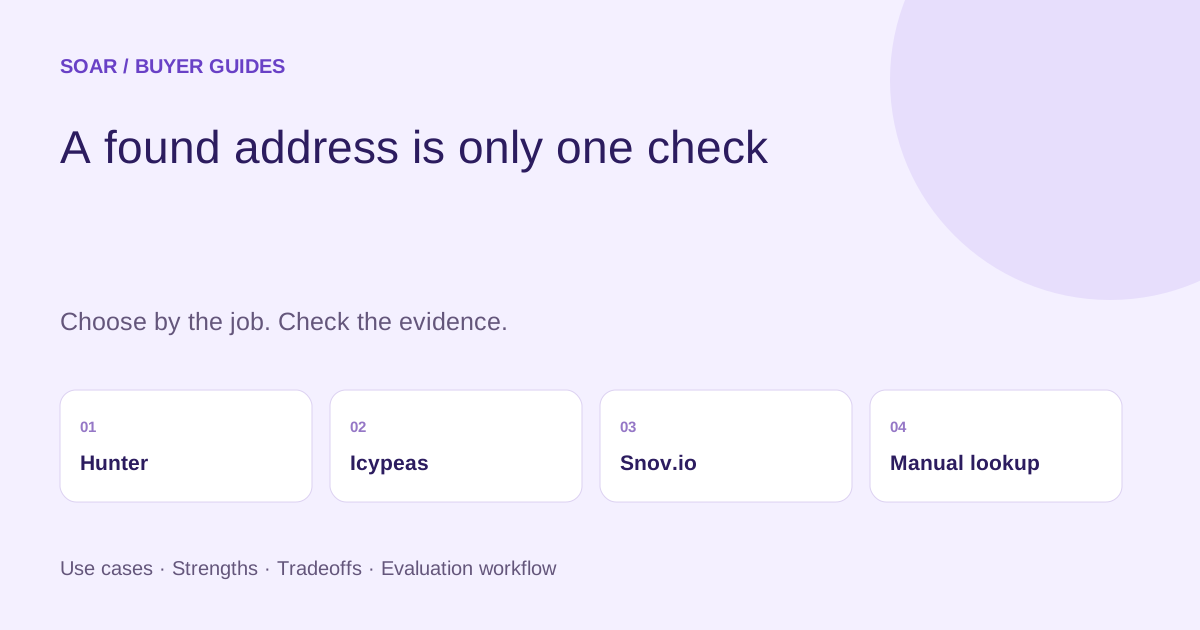
Choose Hunter when you want a straightforward research-and-verification workflow with explicit result labels. Evaluate Icypeas when verified-result pricing and data operations are central to your process. Consider Snov.io when finding and verifying contacts belongs in a broader outreach workspace. For a small editorial list, the most important check still happens outside the verifier: is this person responsible for the relevant publication or topic?
A deliverable address is not proof of editorial relevance, consent or willingness to hear a pitch. Start with the publication, the specific page and a useful reason to contact its owner. Then look for the contact route the publication provides.
Which tool fits a small editorial campaign?
This is a workflow comparison, not a measured ranking of database accuracy. Coverage can vary substantially across the same set of publishers.
| Tool | Choose it when | Useful distinction | What still needs manual review |
|---|---|---|---|
| Hunter | You want domain/name research and clear verification statuses | Accept-all and unknown results remain distinguishable | Person's current role and relevance |
| Icypeas | You want to evaluate a verified-result data workflow | Pricing emphasizes verified emails and includes catch-all verification | Meaning of each returned status and role match |
| Snov.io | Contact research belongs in an existing outreach workspace | Finder and verifier have different charging rules | Whether a found contact is an appropriate editor |
| Manual lookup | A small list has public editorial contact details | Direct evidence from the publication | Whether the page and address are current |
Disclosure: Parse is a related product from our team.
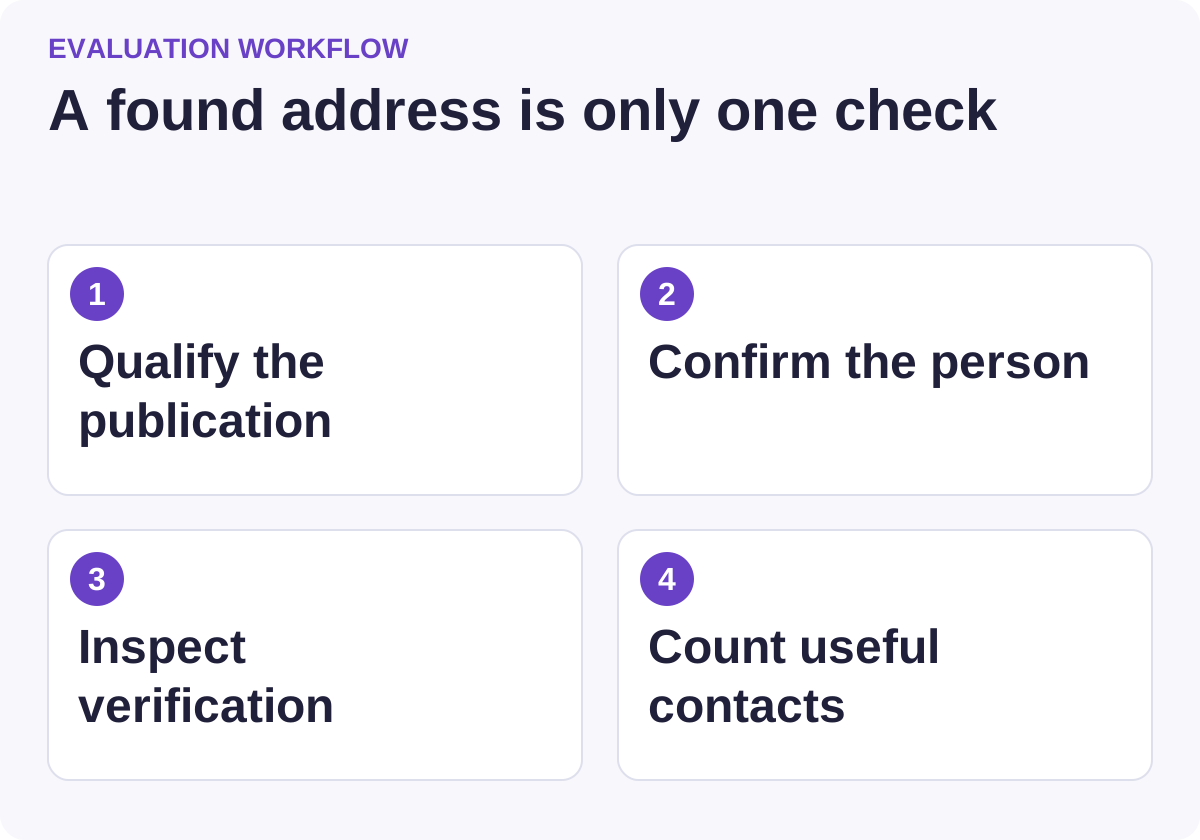
Use this workflow to compare candidates against the same requirements.
Hunter: clear labels help a careful researcher
Hunter's verification guide distinguishes valid, invalid, accept-all and blocked results. It explicitly warns that accept-all domains prevent a full deliverability guarantee. A confidence score should not erase that uncertainty.
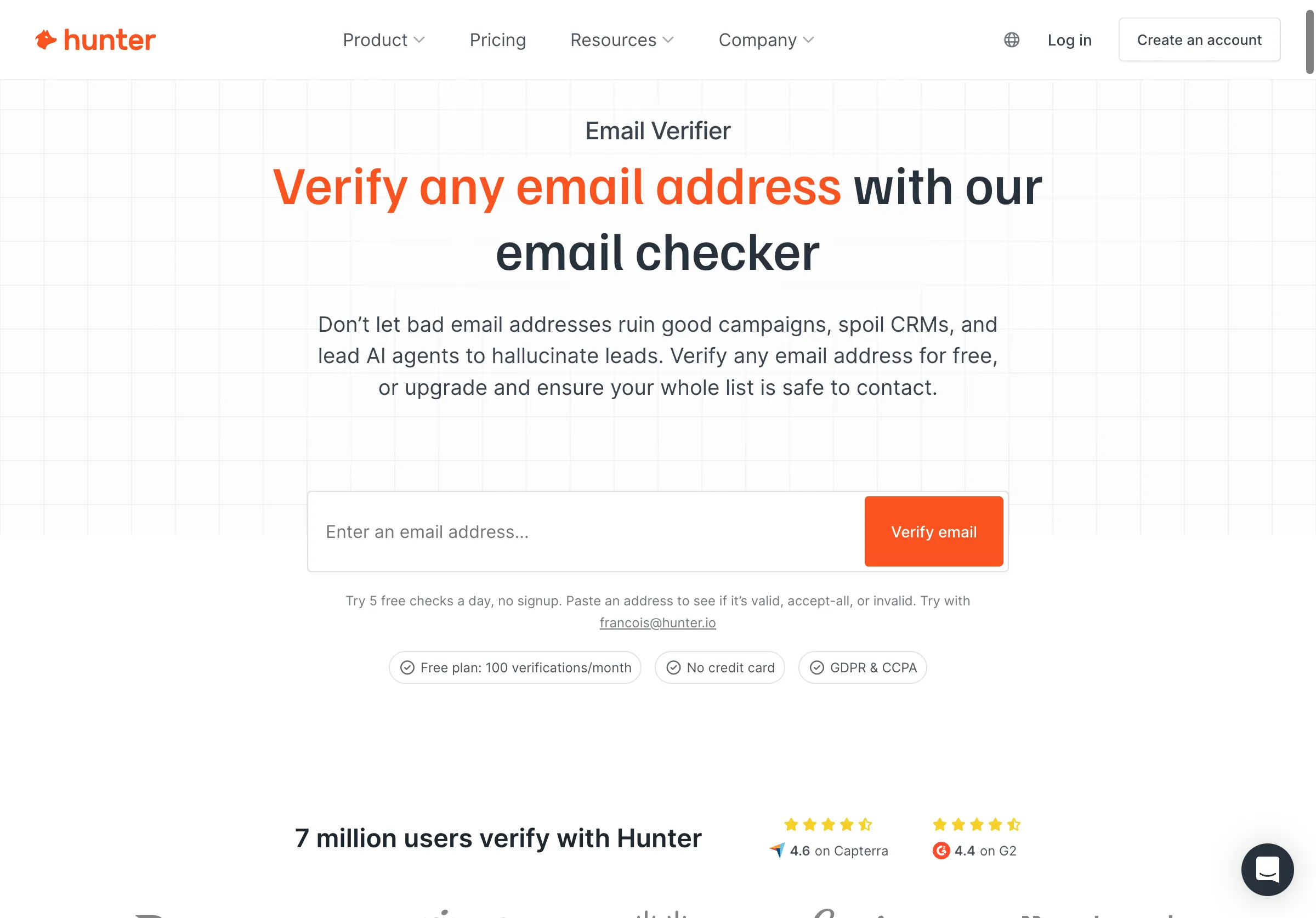
Public source page, captured November 2, 2026.
Choose Hunter when your editor or researcher needs to inspect results one by one and preserve their status. Do not treat a valid mailbox as evidence that the person still edits the publication. Check the current masthead, author page or relevant submission instructions.
Hunter's credit documentation distinguishes its unified All-in-one plans from Data Platform plans. On the unified system, a found email uses one credit and verification uses half a credit; Data Platform uses separate search and verification credits. Confirm the plan before translating a credit count into cost.
Its verification billing guide says valid, invalid and accept-all outcomes consume verification credits on the applicable system, while unknown and disposable results do not. An unsuccessful editorial prospect can therefore still have a billable technical result.
Icypeas: evaluate the returned evidence, not just the pricing promise
Icypeas's pricing page emphasizes paying for verified emails, lists catch-all verification and describes credit rollover. Those are relevant buying details for a team that wants to avoid paying for large amounts of unusable data.
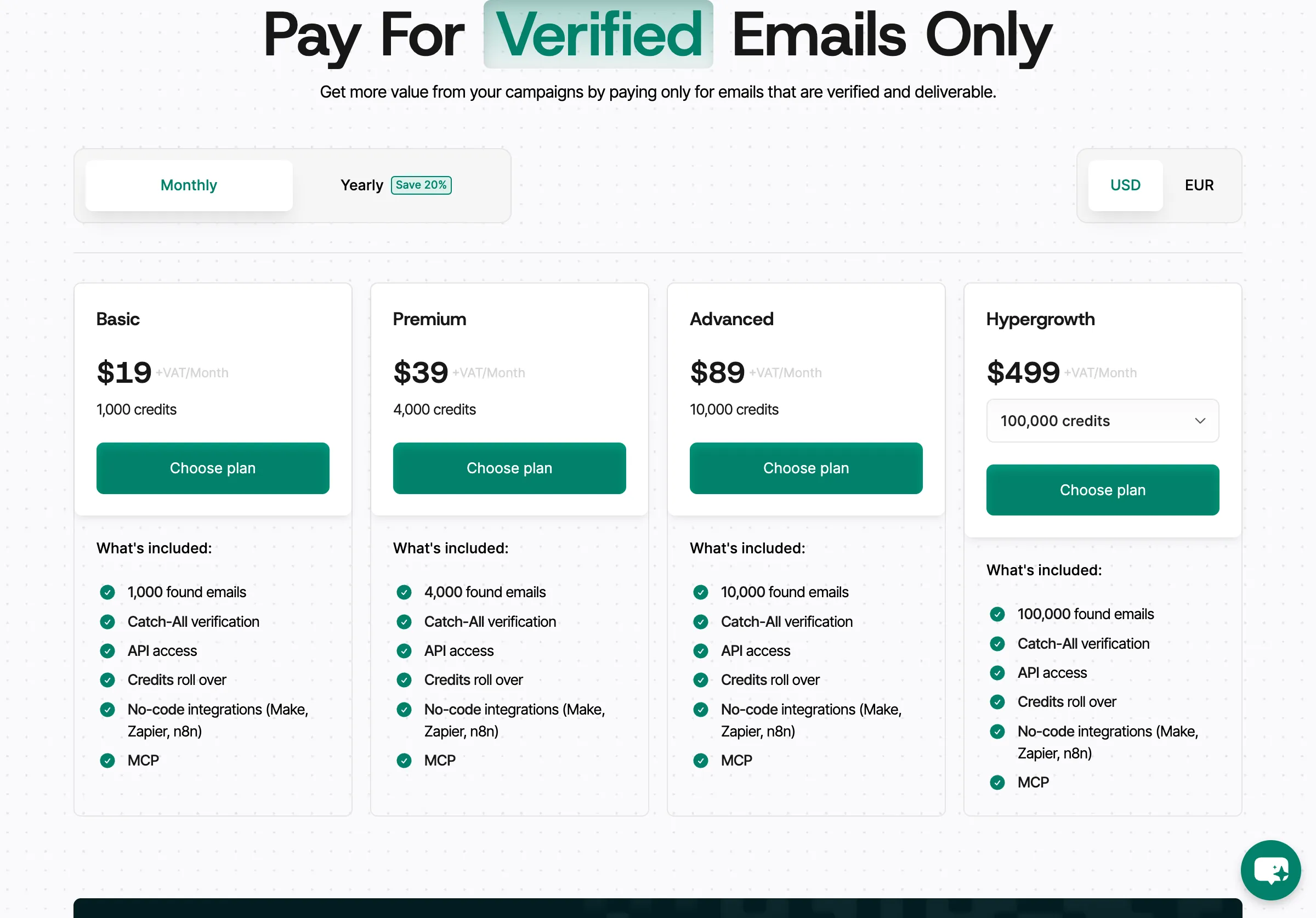
Public source page, captured November 2, 2026.
Choose Icypeas when its finder and verification workflow fits your research process and you can inspect the actual result definitions. Do not assume “catch-all verification” eliminates every uncertainty associated with a domain that accepts arbitrary addresses.
In a trial, retain the returned status, verification date and the evidence used to match the person to the publisher. Ask what happens when an address is unavailable, ambiguous or later found invalid. Confirm whether search, verification and other data operations use the same credit unit.
The meaningful comparison is how many relevant, current contacts survive your review. A tool can return more addresses while producing fewer useful editorial contacts if role matching is weak.
Snov.io: convenient when the broader workspace is already useful
Snov.io's verifier sits within a broader prospecting and outreach product. That can reduce handoffs for a team already using the workspace, but the additional capabilities are not necessary for a handful of carefully researched publisher contacts.
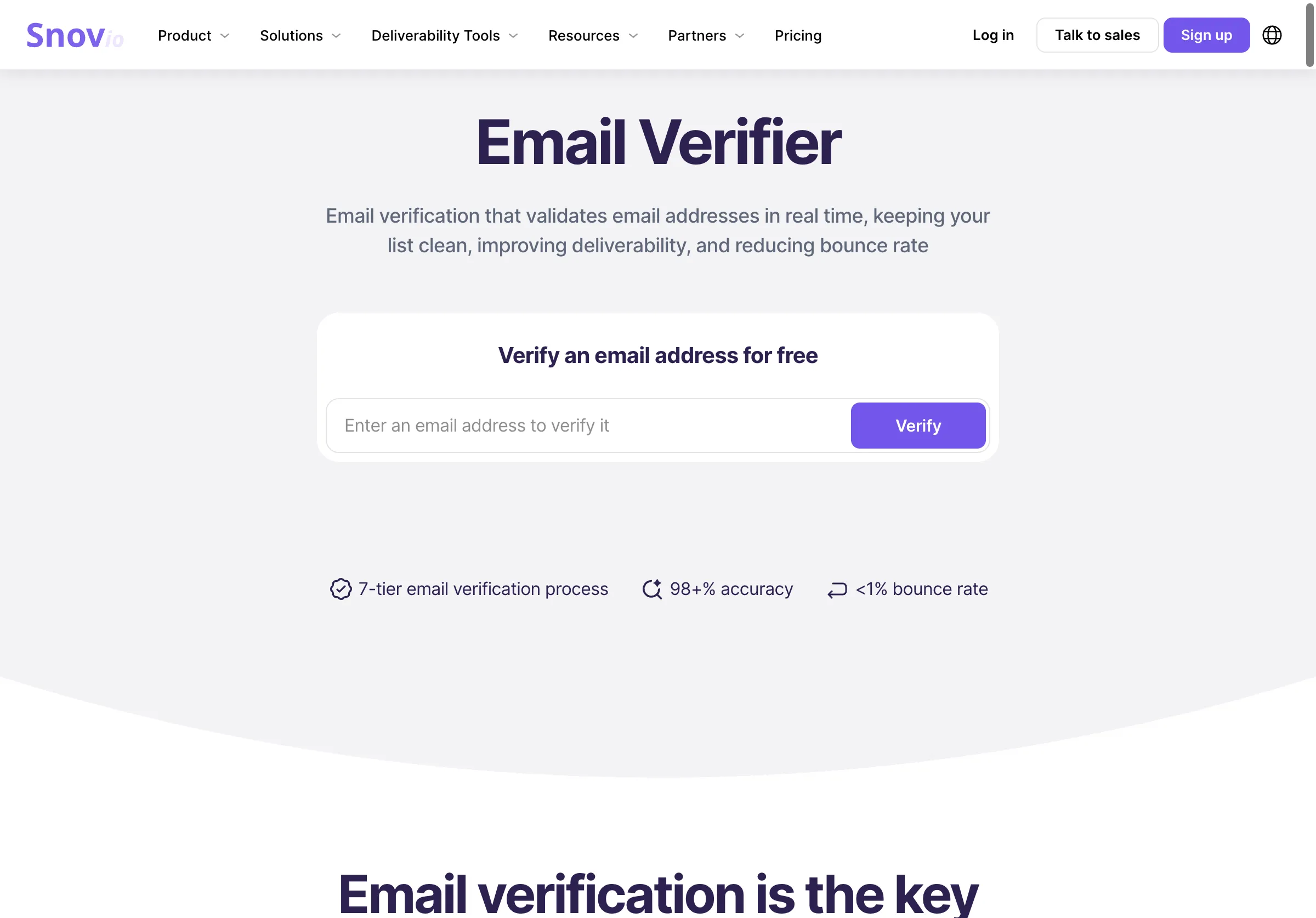
Public source page, captured November 2, 2026.
Choose it when the surrounding contact workflow is valuable. Do not buy automated sequences merely because you need an email finder. A small editorial campaign often benefits from individually reviewed messages and a limited follow-up policy.
Snov.io's verification billing documentation charges one credit for a valid or invalid result and does not charge for unknown results. Its API enrichment guide describes a different finder rule: a found valid or unknown email can consume a credit. Finding an address and verifying it are separate operations.
Check which operation your workflow invokes, and preserve unknown results as unknown. Do not silently recategorize them as safe because the finder returned a person record.
Use the publication's own route first
Before spending credits, inspect the publication's contact, editorial policy and submission pages. A named editor may prefer a form or a shared editorial inbox. That route can be more appropriate than a personal address inferred from a domain pattern.
Record why the contact is relevant: the article they maintain, the beat they cover or the submission instructions that apply. If the person has left the publication, a technically valid address may still be the wrong route.
A publisher appearing in an AI answer is a research lead, not an automatic outreach target. Our publisher outreach guide explains how to retain source context and avoid duplicate contact. Parse can help investigate cited sources before that qualification step.
Evaluate every tool on the same list
Use a small, approved list of public publications that genuinely match your topic. Include a mixture of named editors, shared editorial desks, independent authors and pages with explicit submission forms. Do not include private individuals simply to increase the sample.
Define success before you run the lookup. A useful contact should have a verified current role, a suitable contact route, a recorded source and an understood verification status. A result that fails any of those checks belongs in a separate category.
| Outcome | How to count it |
|---|---|
| Current relevant person, usable route | Useful contact |
| Deliverable address, wrong role | Role mismatch |
| Relevant person, uncertain address | Unresolved contact |
| Public submission form | Valid alternative route |
| Duplicate person or publication | Duplicate, not another success |
| No appropriate contact found | No result; do not guess |
Have a researcher review the results without seeing which tool produced them where practical. Record the review time and the reason for each rejection. This makes the comparison about the work your team must perform, not a vendor's definition of a successful lookup.
No test email is needed merely to score a lookup. Actual outreach is a separate decision with a real message, appropriate recipient and clear purpose.
Calculate cost per useful contact
Use the actual amount paid for the period, plus researcher time if you are comparing full workflow cost. Divide that by the number of contacts that pass the editorial review. Keep the marginal credit calculation separate from the minimum subscription purchase.
For example, if an illustrative trial costs $30 and yields 12 useful contacts, the subscription allocation is $2.50 per useful contact. That is arithmetic, not a measured result for any vendor. If the team spends two hours correcting roles, include that labor in the operational comparison.
Also track unresolved results. A low cost can hide a high unknown rate, while an expensive tool may be unnecessary if the publication already provides a suitable contact form. Credit rollover matters only if future research will use those credits before the applicable limits or expiration.
Keep the eventual message small and specific
The contact record should explain why the person is being approached and what useful evidence is available. A correction with an official source, a relevant original dataset or an expert who can answer a specific question is more concrete than a generic request for inclusion.
Store the last contact date, owner and outcome so colleagues do not approach the same publication independently. Respect a decline and the publication's stated preferences. Better data should reduce irrelevant contact, not make it easier to send more of it.
Start with relevance; buy contact data only for the remaining gap.